Chimney, Flashing and Ridge: The Bits People Forget
When you think about your roof, you probably picture the broad slope of tiles and not much else. Yet the spots most likely to let water in are the small details around the edges, the chimney, the flashing and the ridge, and they are exactly the parts nobody looks at.
These are the junctions and joints where one surface meets another, and water is very good at finding a way through them. A roof can have perfectly sound tiles and still leak because a strip of flashing has lifted or a ridge tile has worked loose. Knowing where these weak points are is half the battle.
The quick answer: Chimneys, flashing and ridge tiles are the joints where roofs leak first, so keeping them clear of moss and checking them for cracks, gaps and lifting is just as important as cleaning the tiles themselves.
1. Why these parts get overlooked
The main slope of a roof is easy to see and easy to think about, which is why it gets all the attention. The chimney sits off to one side, the flashing is a thin line you would never notice from the pavement, and the ridge runs along the very top out of sight.
Because they are small and awkward to reach, these features tend to be ignored until they fail. On a typical Leicester terrace the chimney and ridge are right at the peak of a steep two-storey roof, so most homeowners have simply never had a proper look at them.
2. The chimney and its stack
Even if your fireplace has been out of use for years, the chimney stack is still up there taking the weather. The brickwork and the mortar joints weather over time, and the pointing between the bricks crumbles, letting water soak into the stack and down into the house.
Plenty of Leicester homes still carry their original Victorian stacks, and after a century of East Midlands frosts the mortar is often tired. A stack in poor repair shows up as damp in the bedroom or in the chimney breast, and it is a common source of leaks that get blamed on the roof.
3. Flashing, the weak point at every junction
Flashing is the material, usually lead, that seals the joint where the roof meets something else, like the chimney, a wall or a valley between two slopes. It is doing a hard job, bridging two surfaces that move slightly and expand differently in the heat and cold.
Over the years flashing lifts, cracks or pulls away from the mortar it is tucked into, and once there is a gap, water pours straight in. Where a Leicester bay or an extension meets the main roof, failed flashing is one of the most frequent causes of a stubborn damp patch inside.
4. The ridge line along the top
The ridge is the horizontal line of tiles capping the very top of the roof where the two slopes meet. These ridge tiles are traditionally bedded on mortar, and that mortar is out in the weather taking the full force of the wind and rain.
As the bedding mortar ages and cracks, ridge tiles loosen and can slip or blow off entirely in a gale, which the East Midlands gets its share of. A gap in the ridge is an open door for wind-driven rain, and on the exposed rooftops around Leicester it is worth keeping an eye on.
5. Moss and debris around these features
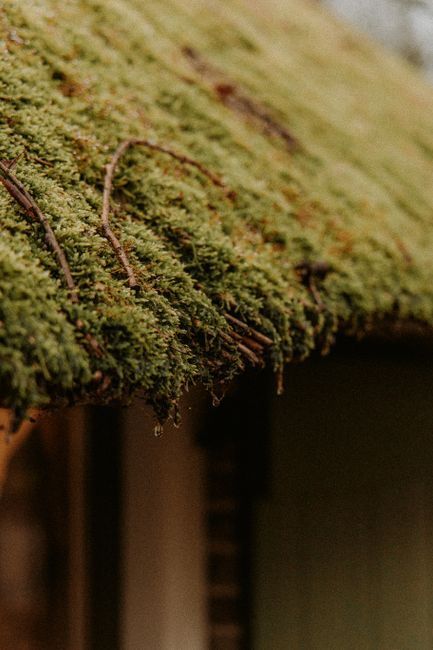
These awkward corners are also where muck gathers. Moss and leaf debris collect around the base of a chimney and along the flashing lines, holding water against the very joints that are already the most vulnerable part of the roof.
In the damp of the Soar valley that trapped moisture speeds up the decay of mortar and lead alike. Clearing growth away from the chimney base and flashing during a roof clean is not just tidying up, it takes the standing water away from the spots most likely to leak.
6. Checking them as part of a clean
A proper roof clean is a good moment to give these details a look, because someone is already up there with safe access. While the moss comes off the tiles, the same visit can take in the state of the pointing, the flashing and the ridge.
That does not turn a clean into a repair, but it does mean problems get spotted early. A homeowner in Knighton or Aylestone might never know a ridge tile had slipped until it let water in, whereas a quick look during a clean flags it while it is still a small fix.
- Chimney stack: Weathered pointing lets water into the brickwork and down the chimney breast.
- Flashing: Lifted or cracked lead at junctions is a leading cause of damp inside.
- Ridge tiles: Cracked bedding mortar loosens ridge tiles that can slip or blow off.
- Trapped moss: Debris around these features holds water against the weakest joints.
- Clean-time checks: A roof clean is the ideal moment to spot small faults early.
Frequently Asked Questions
Why does my roof leak when the tiles look fine?
The leak is often at a junction, not the tiles. Failed flashing around a chimney or extension, worn pointing on the stack, or a slipped ridge tile all let water in while the main slope stays sound.
Do I need to worry about the chimney if I never use the fireplace?
Yes. An unused chimney stack still faces the weather, and crumbling mortar lets water into the brickwork and the house regardless of whether the fire is ever lit.
What is flashing and why does it fail?
Flashing is usually lead, sealing the joints where the roof meets a wall, chimney or valley. It fails when it lifts, cracks or pulls out of the mortar over years of expansion and weathering, leaving a gap for water.
How do ridge tiles come loose?
They are bedded on mortar that ages and cracks over time. Once the mortar goes, the tiles can shift, slip or blow off in strong wind, which the exposed roofs around Leicester see regularly.
Can these areas be checked during a roof clean?
They can, and it makes sense to. With safe access already set up for the clean, a look over the pointing, flashing and ridge catches small faults early, before they turn into leaks.
Worried about the details up top?
Ben's Roof Cleaning cleans roofs and clears moss from every corner across Leicester and Leicestershire, with over 15 years of experience. Get in touch or call 0116 216 7398
for a free, no-obligation quote.
The small details that keep the whole roof dry
A roof is only as watertight as its weakest joint, and that joint is almost never the middle of a tiled slope. The chimney, the flashing and the ridge do the quiet, unglamorous work of sealing the tricky corners, and they are the first to give way when they are neglected. Keeping them clear of moss and having them looked over now and then is one of the simplest ways to keep a Leicester roof doing its job for years to come.